Women helped reshape Africa in 2025

African women did not just make headlines in 2025; they changed them. Across capitals, stadiums, laboratories, boardrooms, and global stages, women from the continent carved new paths, shattered ceilings, and rewrote the script of leadership and excellence. If 2024 felt like momentum, 2025 was the breakthrough — the year Africa’s women claimed space with unflinching clarity, leaving a continental imprint that the world could no longer overlook.
Advocate of the High Court of Kenya, Camillah Agak, attributes much of this progress to long-term structural change.
“There are more women than men graduates in universities and academic settings. As women get more educated, they have better opportunities to be change makers in society,” she says.
She notes that this includes the legal profession, where women now outnumber men at the Kenya School of Law and hold key leadership roles. Such progress, she says, has enabled greater visibility and impact across sectors.
Political firsts: The year women stepped into power
On March 21, Namibia elected its first woman president, an achievement four decades in the making. Netumbo Nandi-Ndaitwah and her vice president, Lucia Witbooi, made history by positioning Namibia as the only African nation to have women as the president and vice president. Together, they represent a recalibration of power, one rooted in decades of diplomatic grit, liberation struggle credentials, and community-first politics.
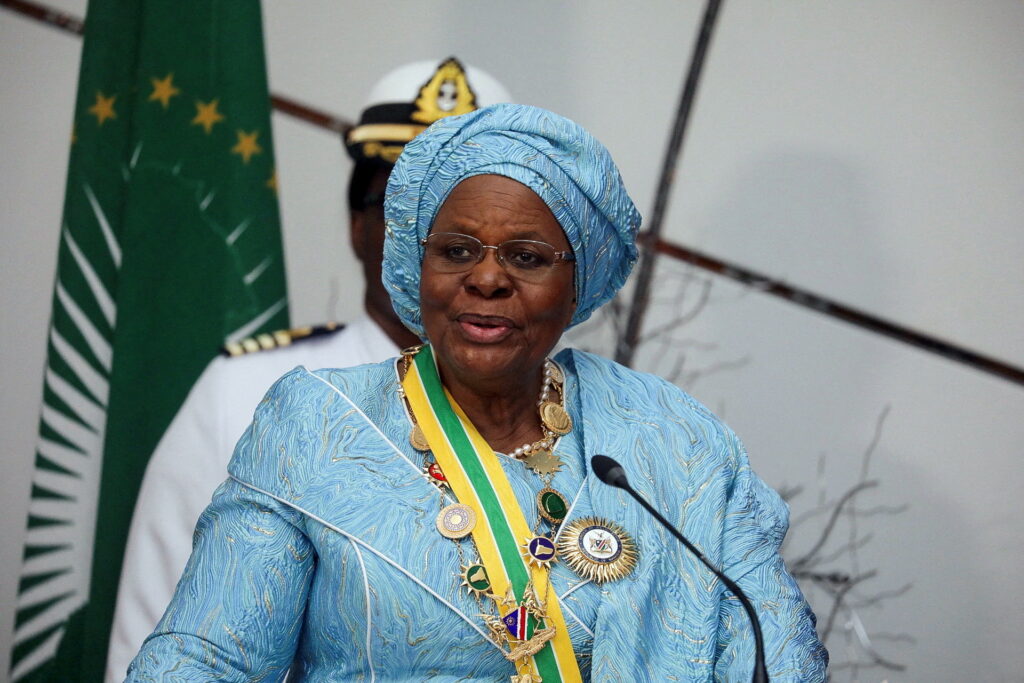
According to Agak, these milestones have implications far beyond national borders.
“These accomplishments help dismantle structural barriers and reduce gender disparities across sectors. Societies with strong female leadership achieve better governance and reduced corruption, stronger protections for human rights, improved education and health outcomes, and overall stable growth,” she notes.
After stepping in for former Tanzanian president John Magufuli, following his death in 2021, President Samia Suluhu Hassan won the office on her own with 98 percent of the vote. She is the first woman to be elected president in Tanzania’s history.
On January 7, Jane Naana Opoku-Agyemang took office as Ghana’s first female vice president. Her trajectory, from university lecturer to trailblazing academic leader, cements her as one of Africa’s most influential intellectuals-turned-stateswomen.
Sarra Zaafrani Zenzri, sworn in as Tunisia’s prime minister on March 21, became the second woman to hold the position. In a politically turbulent period, her technocratic leadership offered rare stability.
Africa’s women set world records
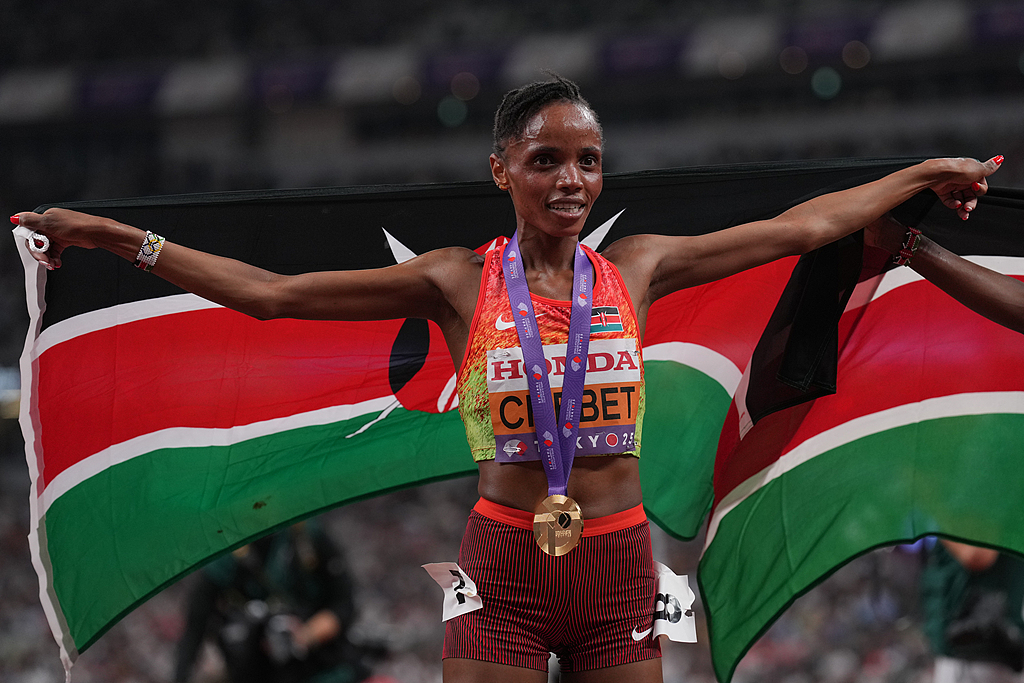
Kenya’s Beatrice Chebet achieved what no woman in track history ever has: a 5,000m–10,000m double at the 2025 World Athletics Championships, following her Olympic double in Paris 2024. Her Tokyo triumphs completed a full sweep of global distance titles, which is a crown unmatched across generations.
Nigeria’s Hilda Bassey, already famous for breaking the world cooking marathon record in 2023 for cooking for 93 hours and 11 minutes, broke another world record in 2025 by cooking the largest pot of jollof rice that weighed 8,780 kilograms. This positioned her as a continental symbol of culinary entrepreneurship and cultural pride.

Fresh off leading South Africa’s women’s sevens team to a historic 2024 performance, Nolusindiso Booi in 2025 spearheaded the country’s highest-ever global ranking, fueling a surge in women’s rugby participation across the continent.
In a historic moment for women in global sport governance, Kirsty Coventry was elected in March 2025 as the first woman and first African president of the International Olympic Committee. Her election is a watershed for representation, elevating African leadership to the helm of the Olympic movement.
Women help engineer Africa’s future
Long-standing structural hurdles remain for women in science and technology.
As Agak explains, “Women are still disenfranchised due to limited funding, capital and resources. While major barriers like limited funding, gender and cultural stereotypes, continued male dominance still exist, they are navigable.” She adds that accessibility challenges, such as the high cost of training, continue to constrain women’s advancement.
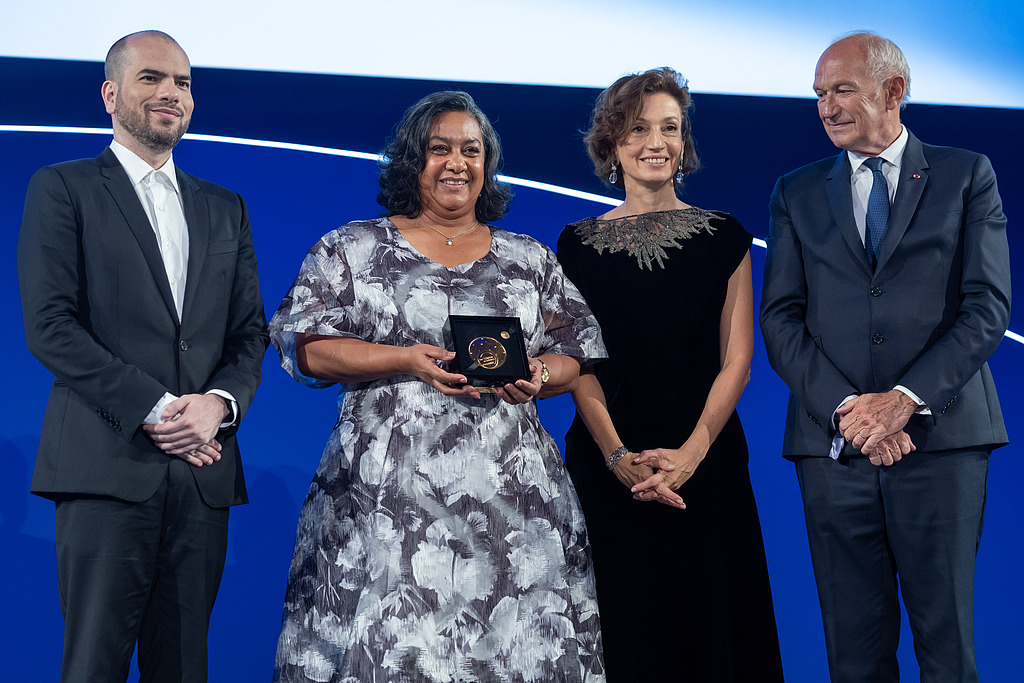
In June, South African chemist Priscilla Baker earned global recognition as the Africa and Arab States laureate of the L’Oréal–UNESCO For Women in Science International Award for her pioneering work on highly sensitive electrochemical microsensors that detect environmental contaminants. Her innovations have applications in food safety, health, pharmaceuticals, and energy.
In November, Kenyan agritech entrepreneur Esther Kimani, founder and CEO of Farmer Lifeline Technologies, won the inaugural Tech FoundHER Africa Challenge. She received one of five equity‑free grants awarded by Naspers / Prosus to scale her solar‑powered, AI‑enabled pest and disease detection tools for smallholder farmers. In April, she also received the Cisco Youth Leadership Award (Global Citizen Prize), highlighting her innovative use of technology to improve food security and rural livelihoods.
Activism and society: Voices that refused to be silent
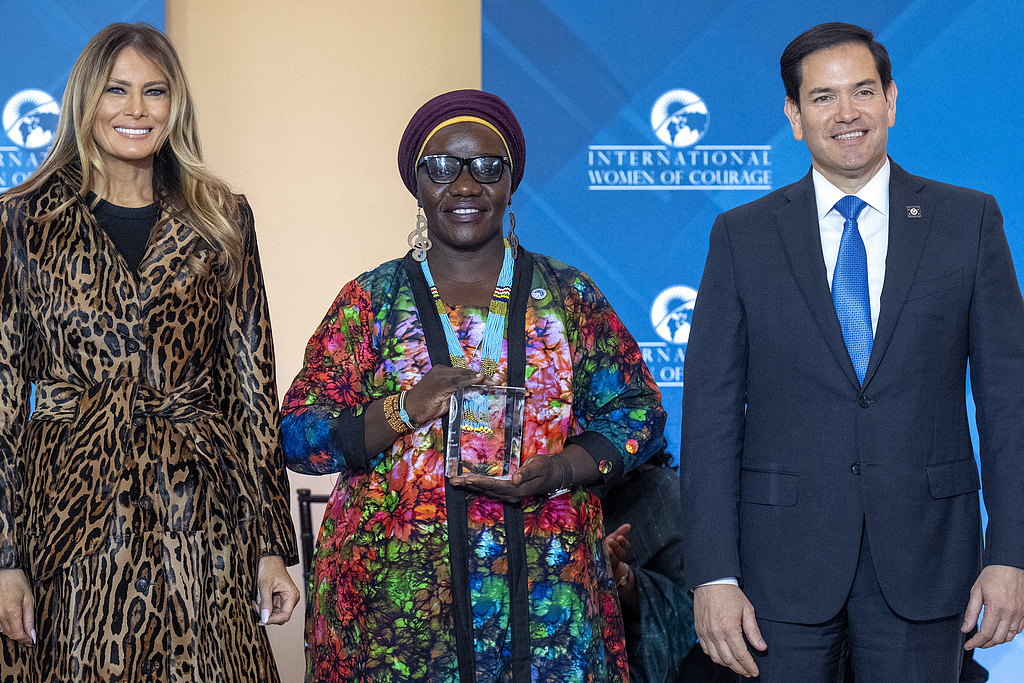
In April, South Sudanese women’s rights and peace activist Zabib Musa Loro Bakhit received the International Women of Courage Award by the US Department of State, one of only eight women worldwide to receive the accolade that year. As founder and executive director of Women for Justice and Equality, she has led grassroots initiatives in post‑conflict South Sudan, championing gender equality, women’s rights, sexual and reproductive health and rights, and transitional‑justice programming in fragile communities.
In September 2025, 11-year-old Kenyan environmentalist Alice Wanjiru captured the International Young Eco-Hero Award for her project rehabilitating Nairobi’s Ruai Sewage Treatment Plant and planting over 2,000 trees to improve local air quality and community health.
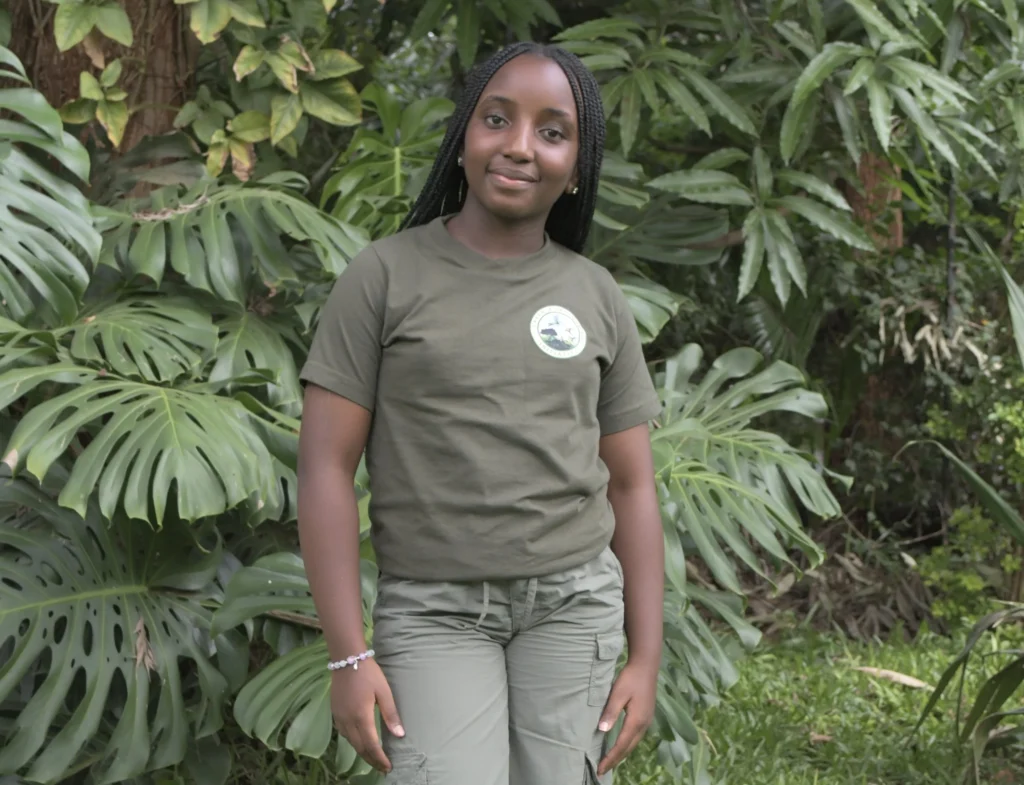
These forms of grassroots environmental leadership, according to Agak, are reshaping the next generation of climate advocacy.
“Since women spend a lot of time in the thick and thin of daily societal life, they can influence policy or legislative action that protects women’s rights and expands their opportunities,” she says.
A continental shift
2025 proved that African women are not just participants in history; they are architects of it. From the halls of government to the forefront of science, tech, activism, and culture, these trailblazers reshaped what leadership, innovation, and excellence look like across the continent. Their achievements this year, from recognition in science to global awards in music, climate advocacy, and entrepreneurship, signal a seismic shift.
As 2025 closes, the stories of these women illuminate a powerful truth: The continent’s future is being written by women who refuse to be sidelined, and the world is taking notice.

Looking ahead, Agak believes women will shape Africa’s social and technological future.
“We currently live in a world that is full of divisive politics, misinformation, disinformation and rapid technological change. Women are uniquely positioned to lead innovations that strengthen emotional, social and cultural resilience,” she says.
Her advice for young African women is grounded in her own journey: “Once you know what impact you want to create in the world, go for it. Stay disciplined and consistent. Find mentors. Once you get where you would like to be, help someone else. Be the ladder!”